Practical Guide to Armenia: Essential Travel Tips
Everything to know before travelling to Armenia: visas, safety, health, weather, money, transport and language, the essential practical guide for your trip.
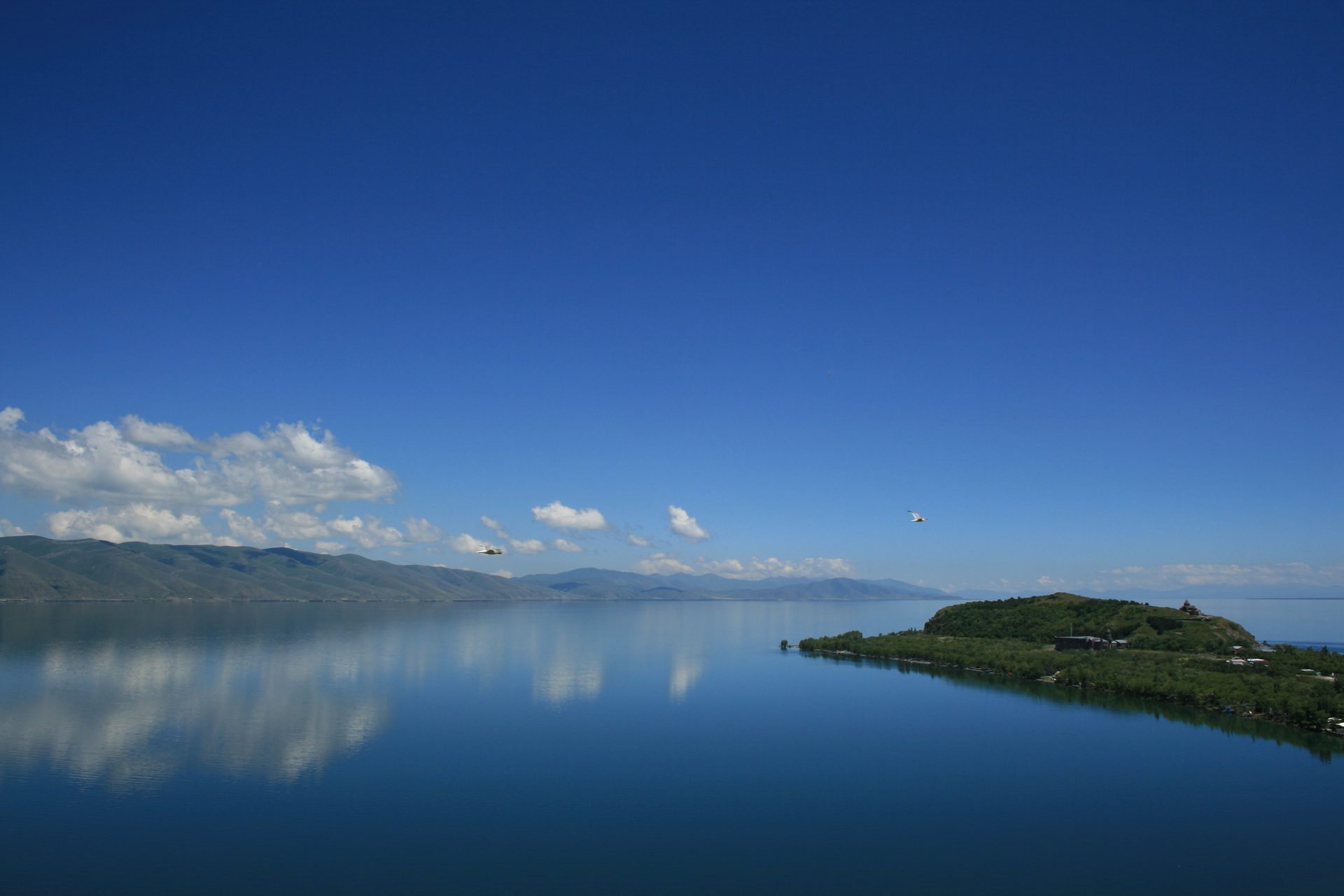
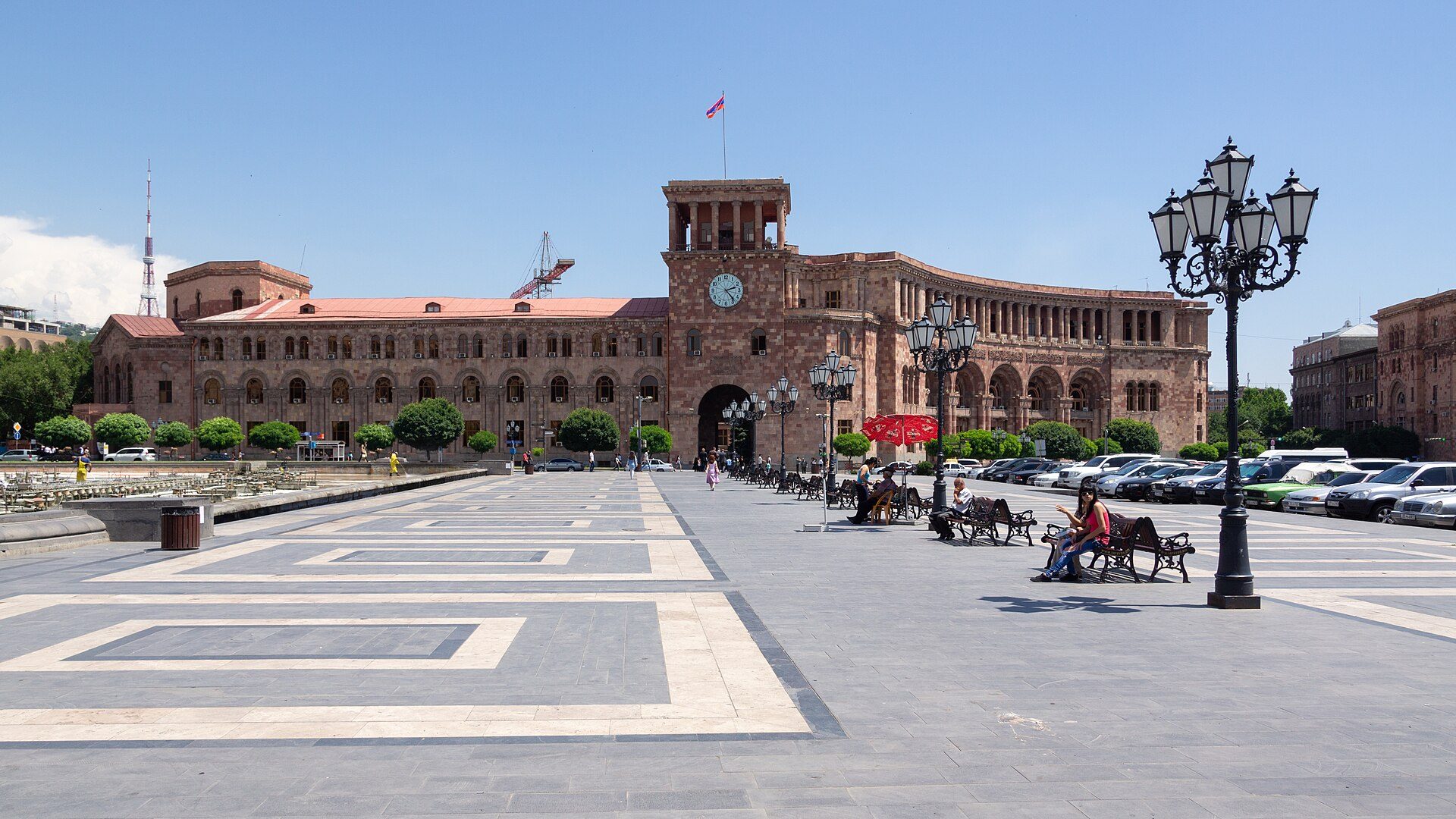
Photo: a-rubenyan · CC BY 3.0 · via Wikimedia Commons
If you fancy heading to Armenia for your next holiday, this guide will be very useful. Why? Because we are going to focus on all the things you absolutely need to know before you set foot in Armenia: visas, safety, health, weather, money, transport, language and more. We’ll tell you everything. For the deep dives, see our dedicated guides to Armenia visa requirements and whether Armenia is safe to visit.
Entry requirements for Armenia
Good news: if you are a national of a European Union (EU) country or of Switzerland, you are exempt from needing a visa for a stay in Armenia of less than 90 days. You simply need a passport valid for at least 3 months beyond your planned departure date. Note that you will also be able to stay in the country for up to 180 days per year without a visa. How lucky!
Are you Canadian? Then you will need a visa to enter Armenia, along with a passport valid for at least 6 months after you leave the country. No need to panic! You can apply for your e-visa by filling in a form available online. It’s simple, quick and convenient.
Note that the tourist visa costs 10 US$ and is valid for 21 days on arrival. For a stay of 120 days, the cost rises to 40 US$. This type of visa is single-entry. As for processing time, it is just 3 working days.
As a reminder, the visa is issued free of charge for children and young people up to 18.
Here are some very useful addresses to help you prepare your trip to Armenia:
In France
Embassy of Armenia: 9, rue Viète, 75017 Paris. Tel: 01-42-12-98-00. Email: ambarmen@wanadoo.fr
Armenian Consulate in Marseille: 15, Av Frédéric Mistral, 13008 Marseille. Tel: 04-95-09-42-80. Email: armgenconsulatemarseille@mfa.am
Armenian Consulate in Lyon: 2, Passage Feuillat, 69003 Lyon. Tel: 01-72-35-16-49. Email: armgenconsulatlyon@mfa.am
In Belgium
Embassy of Armenia: rue Montoyer, 28 Brussels 1000. Tel: 02-348-44-00. Email: info@armembassy.be
In Switzerland
Embassy of Armenia: Parc du Château-Banquet, 1202 Geneva. Tel: 022-320-11-00. Email: mission.armenia@bluewin.ch
In Canada
Embassy of Armenia: 7 Delaware Av, Ottawa, Ontario K2P 0Z2. Tel: (613) 234-3710. Email: armcanadaembassy@mfa.am
Safety in Armenia
Before travelling to Armenia, it is important to have a clear picture of safety in the country. No need to panic! We will run through all the things you absolutely need to know.
Entering the country
First of all, be aware that the land borders with Azerbaijan and Turkey are closed.
The region of Nagorno-Karabakh, long at the centre of the conflict with Azerbaijan, is no longer accessible to travellers and can today only be spoken of in historical terms.
If you want to hire a car to make the Yerevan–Tbilisi (Georgia) journey, we strongly advise you to avoid the route via Ijevan, as it passes through a zone bordering Azerbaijan. For the practical options, see our guide to getting around Armenia.
Safety within the country
Admittedly, the country lies in a seismically active zone, but it welcomes a growing number of tourists.
If you plan to spend your next holiday in Armenia, be aware that it is advisable to avoid the Syunik region, on the border with Azerbaijan. Why? Because mines are still present in that area.
Areas to avoid and areas requiring caution
Contrary to popular belief, Armenia is the safest country in the Caucasus. Many travellers pack their bags to come and uncover the mysteries of this beautiful country. You simply need to avoid the border areas, in particular the closed frontier with Azerbaijan.
As a reminder, the Nagorno-Karabakh area is no longer accessible to visitors.
And crime?
Don’t worry! Crime is low in Armenia. That said, it is strongly advised not to wander at night down small, poorly lit streets, especially in Yerevan or provincial towns, where there has been a certain rise in petty crime.
One more tip: photocopy your documents before you arrive. If anything gets stolen or lost, the formalities will be far simpler.
Health: what you need to know
Here is a very important point to consider before packing your bags: your health.
In Armenia, sanitary conditions are not as good as in Europe. That is why it is advisable to arrange medical repatriation insurance. This is a point not to be overlooked.
Vaccinations
As for vaccinations, don’t forget to make sure you are up to date with your DTP and hepatitis A and B jabs. If you are planning a rural or extended stay, vaccinations against rabies and meningococcal meningitis A and C are essential.
In Armenia, specialists note that there are a few sporadic cases of malaria and tuberculosis. If you feel feverish during your stay, it is vital to see a doctor very quickly.
Healthcare facilities in Armenia
In Armenia, we note a lack of resources and infrastructure in the hospitals. No need to panic! There are private clinics and competent doctors in Yerevan and the country’s major cities.
Beware! If the doctor quotes you the cost of treatment in advance, don’t be surprised. That’s perfectly normal!
Note that citizens of EU member states are entitled to free medical treatment (in principle).
Food hygiene
In Armenia, it is best to avoid tap water. It is drinkable, admittedly, but don’t drink it! Opt for bottled mineral water instead.
Don’t forget, too, to wash your hands regularly, and of course to wash any fruit and vegetables bought at the market. What’s more, you should only eat peeled fruit and vegetables. During the hottest months, avoid cheese, ice cream and meat as much as possible.
The weather in Armenia
Before setting off for Armenia, it is essential to have an idea of the weather so you can choose the right time to go.
Note that the country is subject to the rigours of a continental climate, with significant temperature swings between the seasons, heightened by variations in altitude.
In summer, the temperature ranges between 30 and 40°C. So don’t forget to keep yourself hydrated regularly!
In winter, it can be -3°C in Yerevan, in Gyumri and in the north-west of the country. In the evening, the temperature can drop further and it gets very cold. Don’t forget to bring warm clothing and to book a hotel room with heating.
In the capital, it snows from time to time. But if you really want to enjoy the snow, it is around Lake Sevan and in the north that you should set down your bags.
If you want to have an excellent stay in Armenia, it is best to favour the period between late April and mid-June, and between mid-September and mid-October. You are unlikely to be disappointed! Our guide to the best time to visit Armenia goes into more detail season by season.
Transport in Armenia
In Armenia, the bus network is antiquated and internal flights are very rare. This is why tourism professionals advise travellers to hire a car to explore the country’s various towns.
If you are French, be aware that you can drive there. You simply need your driving licence, your passport and your visa. That said, be aware that driving is not an easy task in Armenia. Why? Because the roads away from the main arteries of the capital and provinces can be damaged. What’s more, the road signage is poor. It is therefore better to hire a car with a driver.
The language spoken in Armenia
Armenian is the country’s official language. It is an Indo-European language. There are also other mother tongues: Russian, Kurdish, Aramaic, Georgian, Ukrainian and so on.
Note that a good part of the population speaks Russian. However, the current generation speaks English. This language is becoming the leading foreign language of the younger generations.
Money
The Dram (AMD) is the country’s official currency. There are notes of 50,000, 20,000, 10,000, 5,000, 1,000 and 500 AMD, and coins of 500, 200, 100, 50, 20 and 10 AMD.
ATMs are very rare, and credit cards will only be useful in a few rare shops and tourist spots. Note that cheques will be of no use to you whatsoever.
It is important to bring euros with you to exchange on arrival. Banks are open from 9.30am to 5.30pm, Monday to Friday, though some branches open on Saturday morning. As for bureaux de change, they are open from 9am to 6pm.
Plan your visit
With the practicalities out of the way, all that’s left is to dream up the trip itself. Follow one of our ready-made Armenia itineraries, build your own or book an all-inclusive tour with us, and start with how to get to Armenia for the first step of the journey.