The History of Armenia: From Antiquity to the Middle Ages
Explore Armenia's turbulent history from Antiquity to the Middle Ages, the world's first Christian state that defied invaders to preserve its identity.
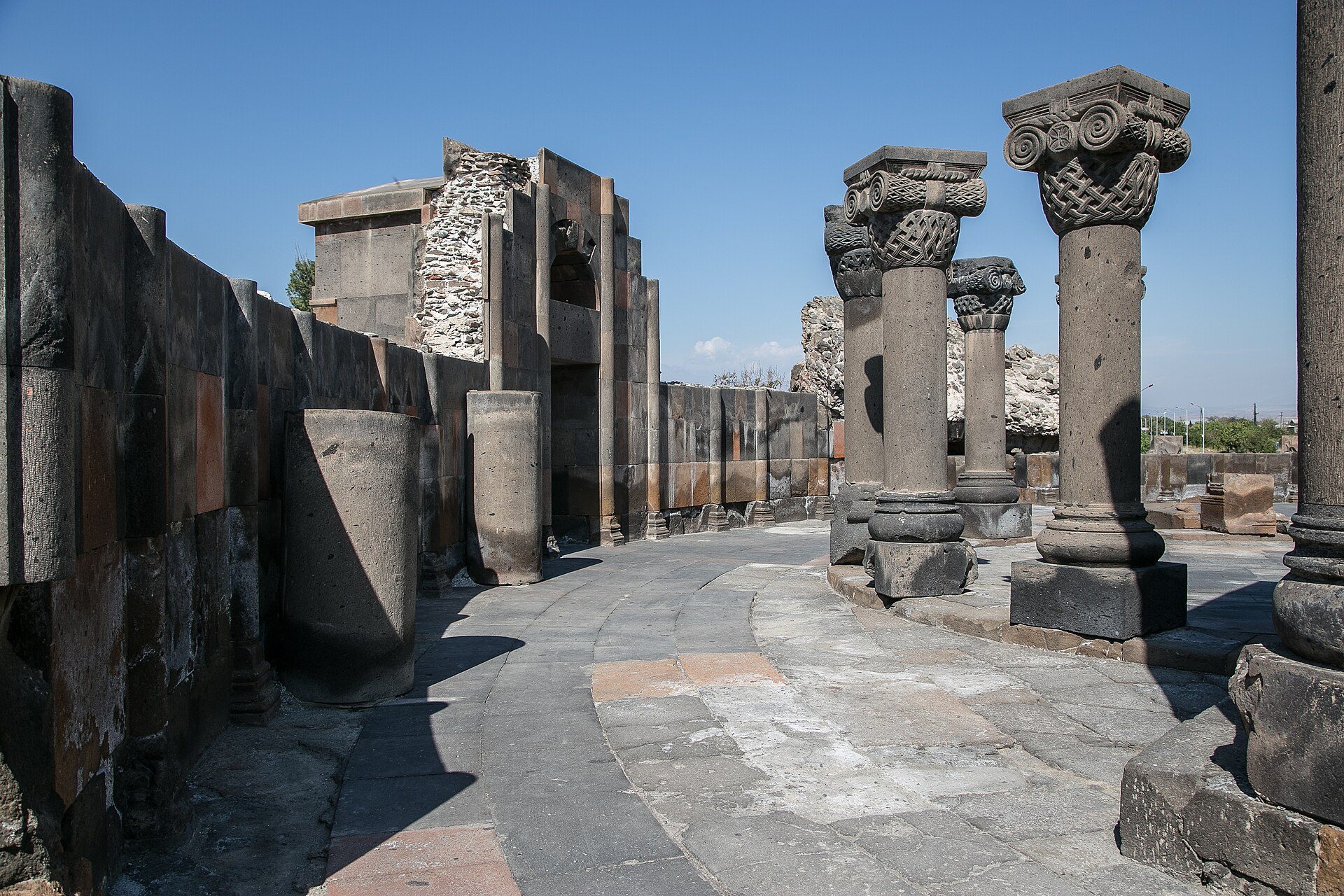
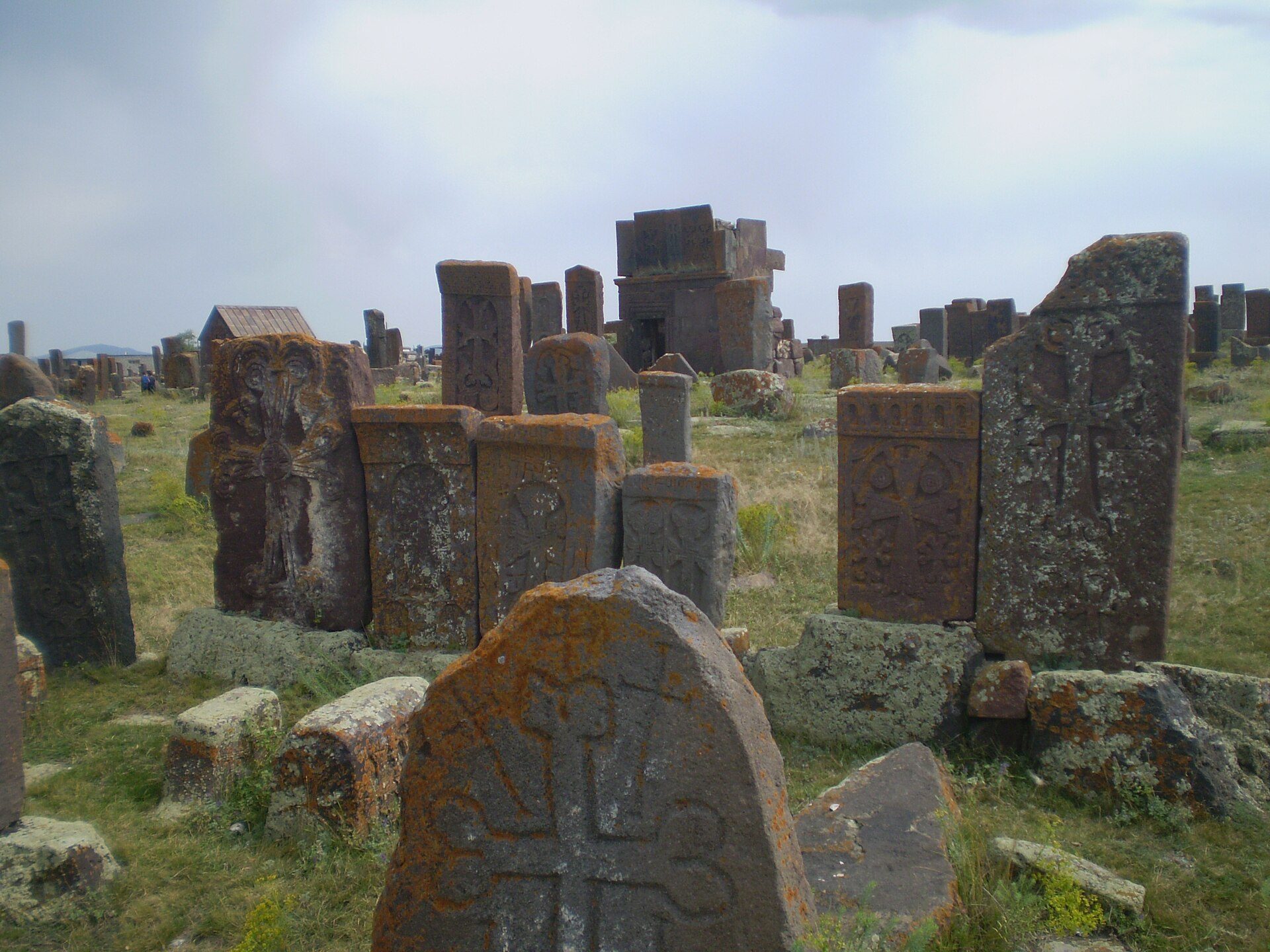
Photo: Saro Hovhannisyan · CC BY-SA 4.0 · via Wikimedia Commons
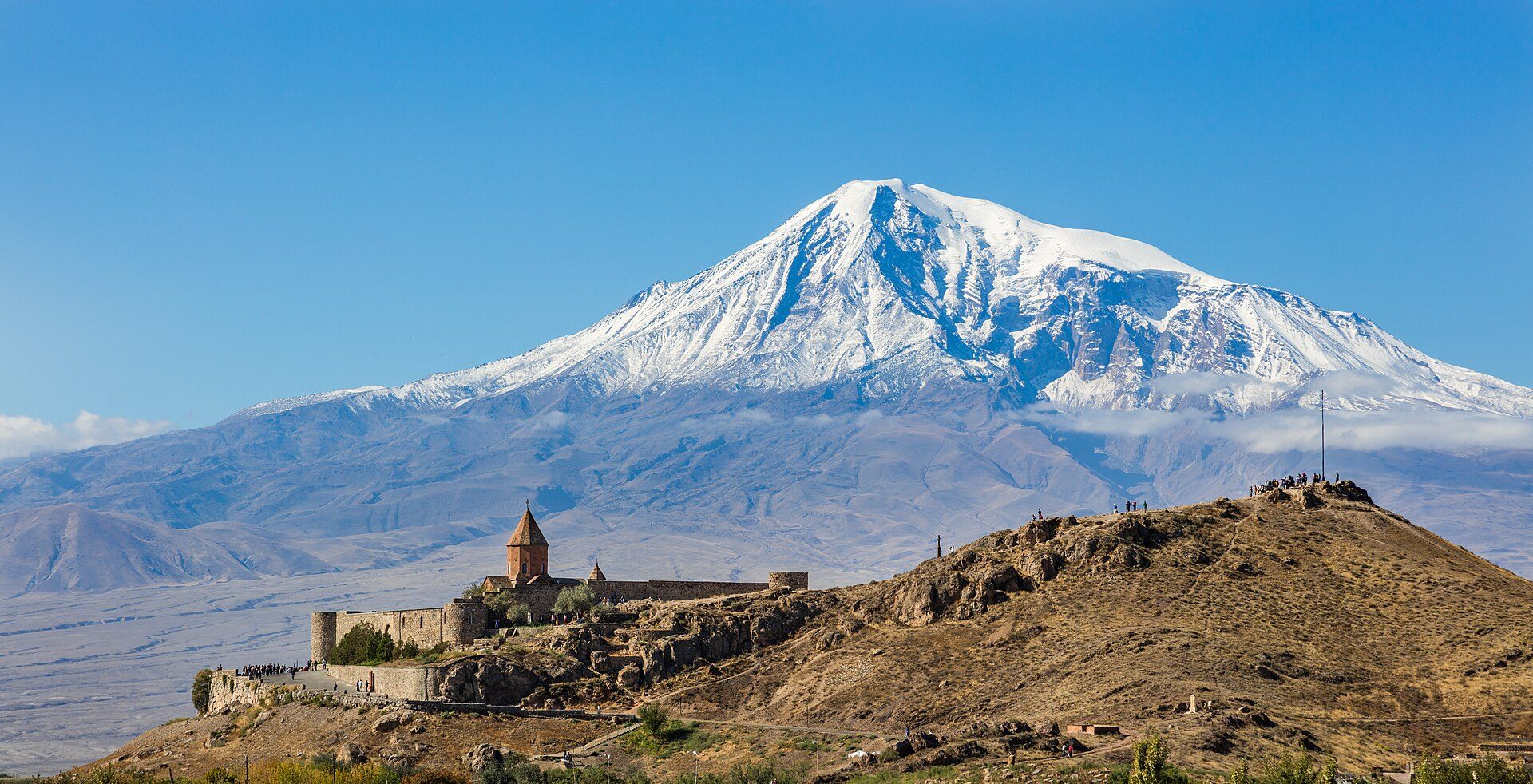
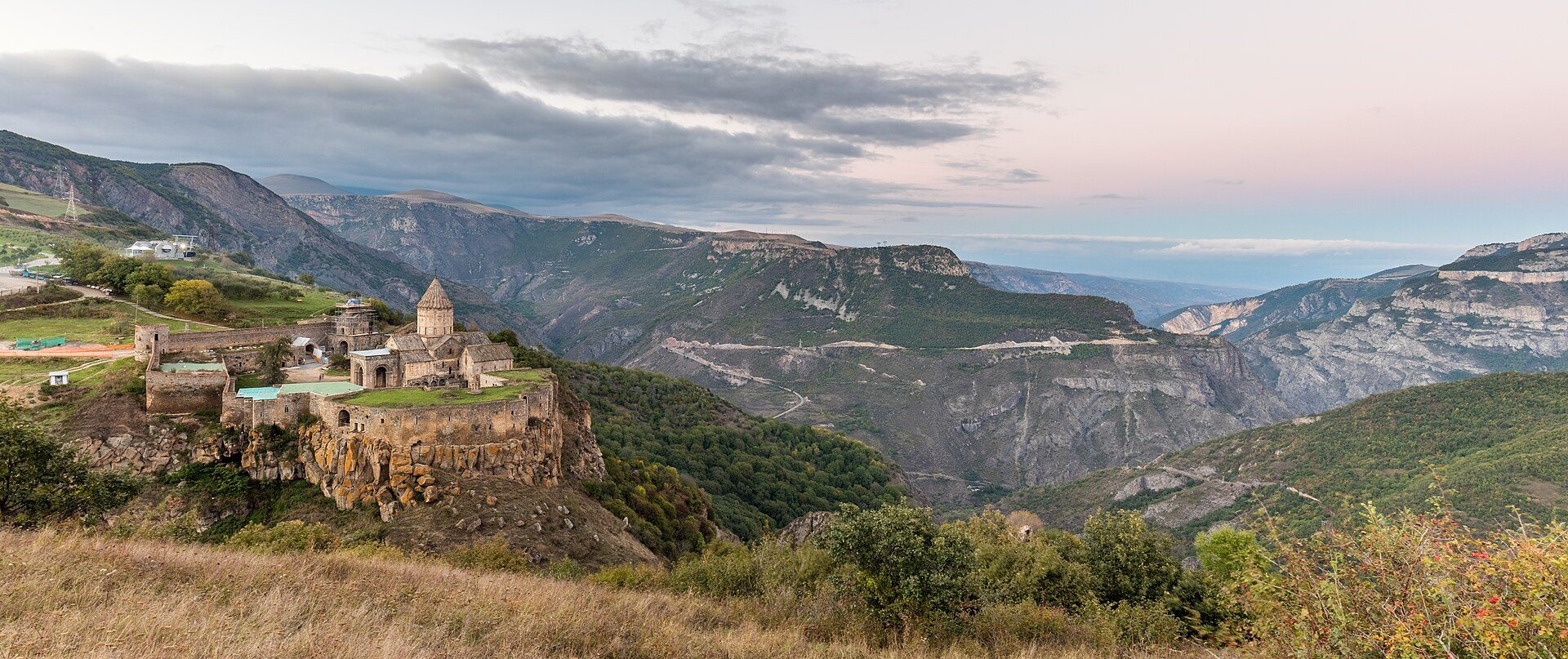
Situated in the north-east of Anatolia, Armenia today shares its borders with Iran, Georgia, Turkey and Russia. Traces of its history reach back to prehistory, and the country has forged a remarkably solid identity, bound together since the 4th century by the Christian religion that has remained the cement of its people, despite successive invasions and periods of foreign rule.
Its geographical position, at the crossroads between the great empires of Antiquity and the Middle Ages, made the country an object of desire for many peoples. Time and again it won its independence, and time and again it was forced to give it up, yet the people never resigned themselves, and today Armenia is an independent republic.
Photo: Սարո Հովհաննիսյան · CC BY-SA 4.0 · via Wikimedia Commons.
The origins of Armenia’s history
The earliest traces of settlement in Armenia date back to prehistory and bear witness to structured human organisation. It is not until 883 BC, however, that we find proof of an Armenian political existence, with the Kingdom of Urartu.
This kingdom, astonishingly ahead of its time, was born from the unification of the tribes settled on the territory of present-day Armenia. It was highly advanced for the period, with the construction of imposing citadels, the breeding of horses, and the development of metallurgy and bronze working.
Between 840 and 830, King Sarduri I, or Sapur I, founded the city of Tushpa, which became the capital of his kingdom. Tushpa corresponds to the present-day site of Van Kalesi, in eastern Turkey.
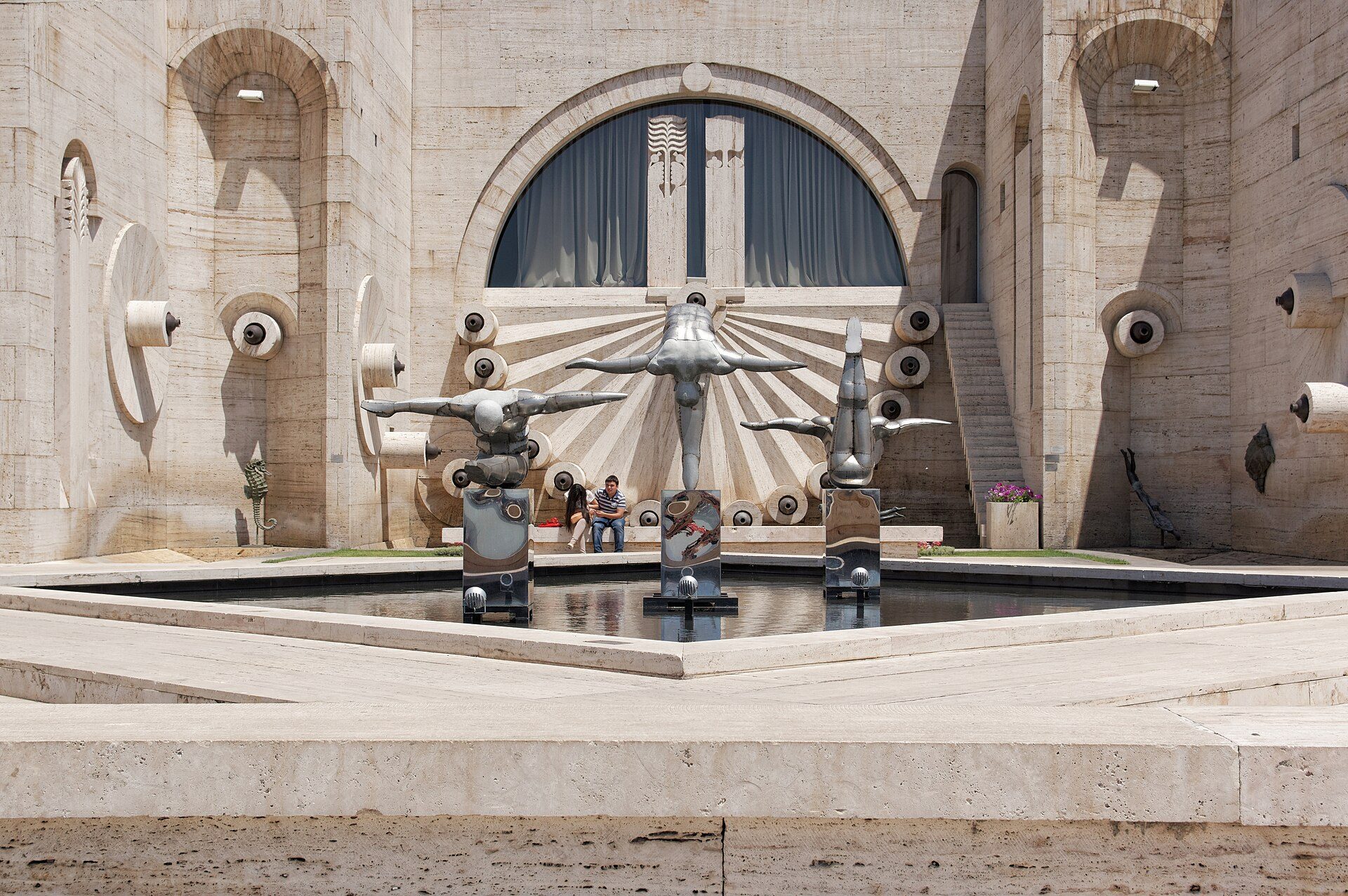
In 782 BC, we already find traces of the founding, by King Argishti I, of the city of Erebuni, today Yerevan, the capital of Armenia.
Urartu came up against the Kingdom of Assyria, which coveted its territory, but also against the Scythians of the Eurasian steppes and the Medes from north-western Iran. The territory was small and its mountainous terrain difficult to conquer, but its strategic location attracted conquerors from all sides.
The Persian conquest
Despite the fierce resistance of the native population, in 590 BC the country was conquered by the Medes, who destroyed the emerging organisation of the Armenian people. Achaemenid Persian rule would last for two centuries. The country was divided into two satrapies (a satrapy being an administrative division of the Achaemenid empire under a governor).
Territorial unity was nonetheless preserved. The Armenian people had to pay a tribute to the empire that occupied them. Having maintained their remarkable skills in horse breeding, the levy was paid in the form of foals, extremely precious goods at the time.
Persian rule, which lasted two centuries, had the consequence of introducing elements of Iranian civilisation into Armenia.
The conquest of Alexander the Great
In 331 BC, Alexander the Great conquered the whole region, allowing Armenia to recover its territorial integrity but, above all, an independent existence that blended into Hellenic culture. The country reconstituted itself as a kingdom, thanks to King Orontes III (317–260 BC), a descendant of a satrap.
At the beginning of the 2nd century BC, the general Artaxias seized power and set out to conquer new territories, through war but also through diplomatic arrangements. The country gained considerably in size.
Meanwhile, however, the Parthians invaded Persia and claimed sovereignty over Armenia. It found itself reintegrated into the Persian Empire in the 2nd century BC. The Armenians once again had to pay tribute to their invaders in order to retain a semblance of sovereignty.
The Armenian golden age
Despite a history shaken by successive conquests, it was during the 1st century BC that Armenia reached its golden age, under the reign of King Tigranes II (95–55 BC), with its greatest geographical expansion.
Tigranes II was a diplomatic king who understood the importance of ties between the rulers of different countries. Under him, Armenia became influential, thanks to an alliance with the Kingdom of Pontus, situated on the southern coast of the Black Sea, sealed by the marriage between Tigranes II and Cleopatra, the daughter of Mithridates VI, King of Pontus. This union also enabled the king to resist the conquering Roman Empire.
An important fact for what followed in its history, it was also at this time that Armenia abandoned polytheism in favour of monotheism, with Persian Zoroastrianism.
Rome feared the power of the Armenian kingdom and charged its general Lucullus with invading it. Tigranes II had to ally himself with the Romans to keep his throne. On his death in 55 BC, Rome regained power and destroyed the Armenian kingdom, which became Roman territory in the year 1.
A reversal of fortune came in 66, when the emperor Nero crowned the first Arsacid king of Armenia, Tiridates I. His dynasty established a hierarchical system resembling feudalism and remained in power until 428.
Christian Armenia
The evangelisation of Armenia is attributed to the preacher Saint Gregory, known as the Illuminator (257–331). By convincing King Tiridates IV (298–330) to convert, he made Armenia the first officially Christian state in the world. Having become Gregory I, he was the first patriarch of the Armenian Church.
In 405, the monk Mesrop Mashtots invented the Armenian alphabet. It made it possible to translate the sacred texts and established itself throughout the country, eliminating all the other alphabets, Greek, Syriac and Persian. This is how the linguistic unity of Armenia was born, laying the foundation for the rich literature and arts that followed.
Christianisation first plunged the country into chaos, for the Sassanids, who had established Zoroastrianism, opposed it. The religious struggle was fierce and reached its climax in the Battle of Avarayr in 451. The Armenians laid claim to their cultural, political and religious independence.
The Armenian people quickly and very deeply attached themselves to the Christian religion. In 506, the Armenian Church rejected the Council of Chalcedon of 451, the patriarch took the title of “Catholicos”, and asserted its independence from the Church.
The Byzantine Empire, Christianised in 312, conquered Armenia in turn in 629. This domination was short-lived, as the Arab conquest once again turned the country upside down in 653.
The Middle Ages and the Islamic conquest
After the Islamic conquest, Armenia, by now definitively Christian, remained under the influence of the Christian Byzantine Empire.
The country was invaded in 645 by the Arabs and became a tributary of the Medinan caliphate in 653. It had to recognise its authority in 661. The country nevertheless managed to preserve its culture and religion, but it had to pay a tax that Muslims levied on non-Muslims.
At the end of the 7th century, as Armenia passed under the direct administration of the caliphate, the rules hardened and non-Muslims were oppressed and even more heavily crushed by taxation. The people’s revolts were harshly repressed, in violence and bloodshed. In 772, the Battle of Bagrevand cemented Arab domination.
Meanwhile, a part of the Armenian population that had settled on Byzantine territory during the 6th century flourished. It had taken part in the creation of a new Byzantine district that took the name “Theme of the Armeniacs”, under the impetus of the Roman emperor Maurice I (539–602).
A paradox of the age: the Christian Armenian identity remained extremely strong, even though its people did not always live in their own country.
The consequences of Muslim domination
Under Muslim rule, Armenia experienced dramatic political disorganisation, due, among other things, to the weakening of the Abbasid empire of Baghdad at the time.
The great Armenian families, the nakharark, took advantage of the weakness of the Arabs to restore a native power, which was achieved in 862. In 885, Ashot I was recognised as King of the Armenians by Byzantium and by the Arab caliphate. His reign gave rise to a major economic boom and was accompanied by the restoration of Christian places of worship and the construction of new churches.
Yet the nakharark sat uneasily with royal power, and the country began to crack. The Byzantines took advantage of this to reconquer it in 1045. A little later, the Turks also managed to invade part of the country, in the region of Ani in 1064.
Faced with the Turks, the Armenians drew closer to Byzantium and created a kind of new Armenian state in south-eastern Anatolia in 1080. This Armenian Kingdom of Cilicia sought to be independent, based on a Western model, and drew closer to the Catholic Church. Leo I was recognised as King of the Armenians by the Pope in 1198.
The Armenian Kingdom of Cilicia disappeared in 1375, following the Mongol invasion and that of the Mamluks of Egypt.
The end of the Middle Ages
During the Middle Ages, Armenia remained a vassal territory of Byzantium, which sharpened the national sentiment that crystallised around the Christian religion. At the end of the 15th century, the country found itself at the crossroads between the Ottoman Empire to the west and the Persian empire to the east. The great families were destroyed, the diaspora grew, and the territory fragmented.
The Armenians settled in Constantinople and in Isfahan and excelled in international trade and finance. They founded the first printing press in Constantinople in 1567, as well as the first printing press in Persia in 1636.
The first Armenian Bible was printed in 1666 in Amsterdam, where the diaspora had also settled.
With the end of the Middle Ages, a new era opened, just as turbulent, and the country still had many battles to fight before becoming the democracy we know today, a story we continue in the history of modern Armenia.
Plan your visit
Many of the sites woven through this history, from Garni to Etchmiadzin, can still be visited today. Build your own itinerary or book an all-inclusive tour to walk them for yourself, and see how it all began in the story of Yerevan and its history.