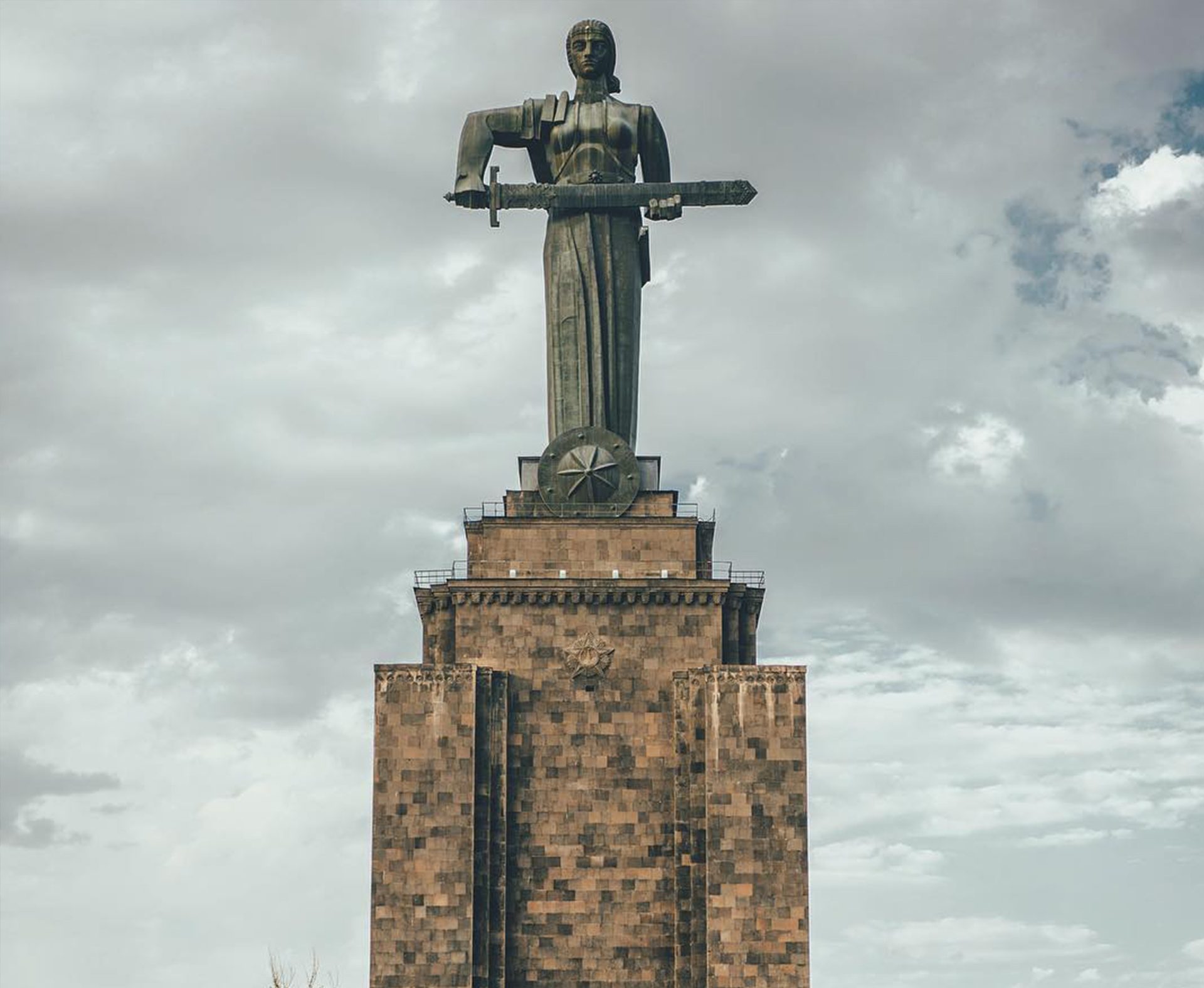
Armenian Art, Music and Literature
Discover Armenian culture, drawing its richness from a long history and made unique by an extraordinarily powerful national identity.
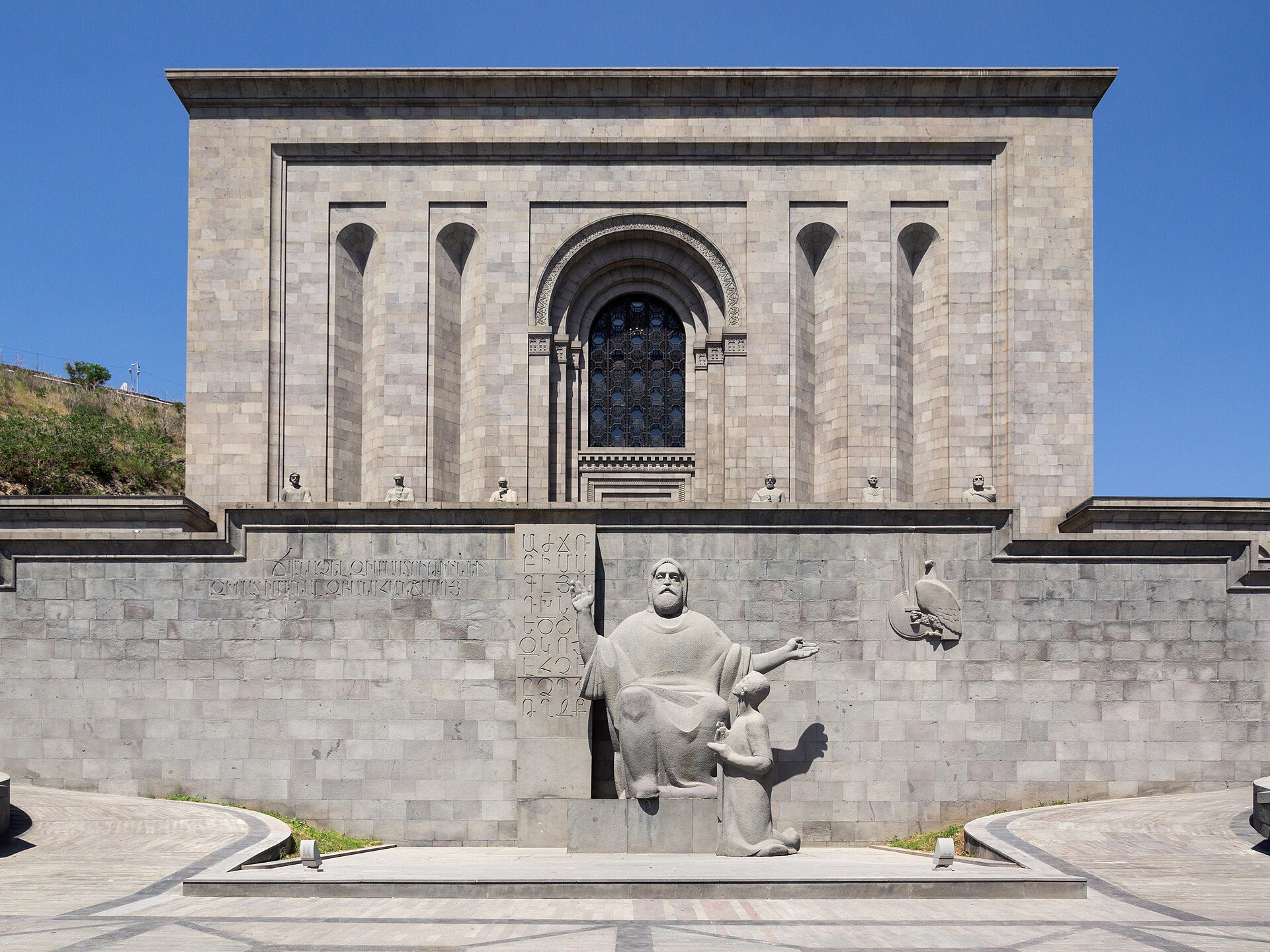
Photo: Vyacheslav Argenberg · CC BY 4.0 · via Wikimedia Commons
Armenian culture is a rich blend of flavours, colours and influences unique to the country. The pagan empires that succeeded one another over the centuries before Christ, and then Armenia’s long history as the world’s first Christian nation, shaped its culture.
Situated at the crossroads of East and West, Armenia was for a long time a strategic point and a meeting place for the great empires. Romans, Iranians, Byzantines, Arabs, Turks and Mongols all passed through Armenia and influenced its culture.
Trade allowed Armenia to enrich itself with new ideas and techniques that were put to use in its art. Because of these many influences, Armenian culture shares elements with neighbouring cultures, but it also has an originality that makes it unique.
Christianity and its own distinctive alphabet are found throughout Armenian culture (particularly in literature and the khachkars) and are central elements of Armenian identity. The landscape and the rocky mountains also exert a strong influence on the Armenian arts.
Armenian architecture
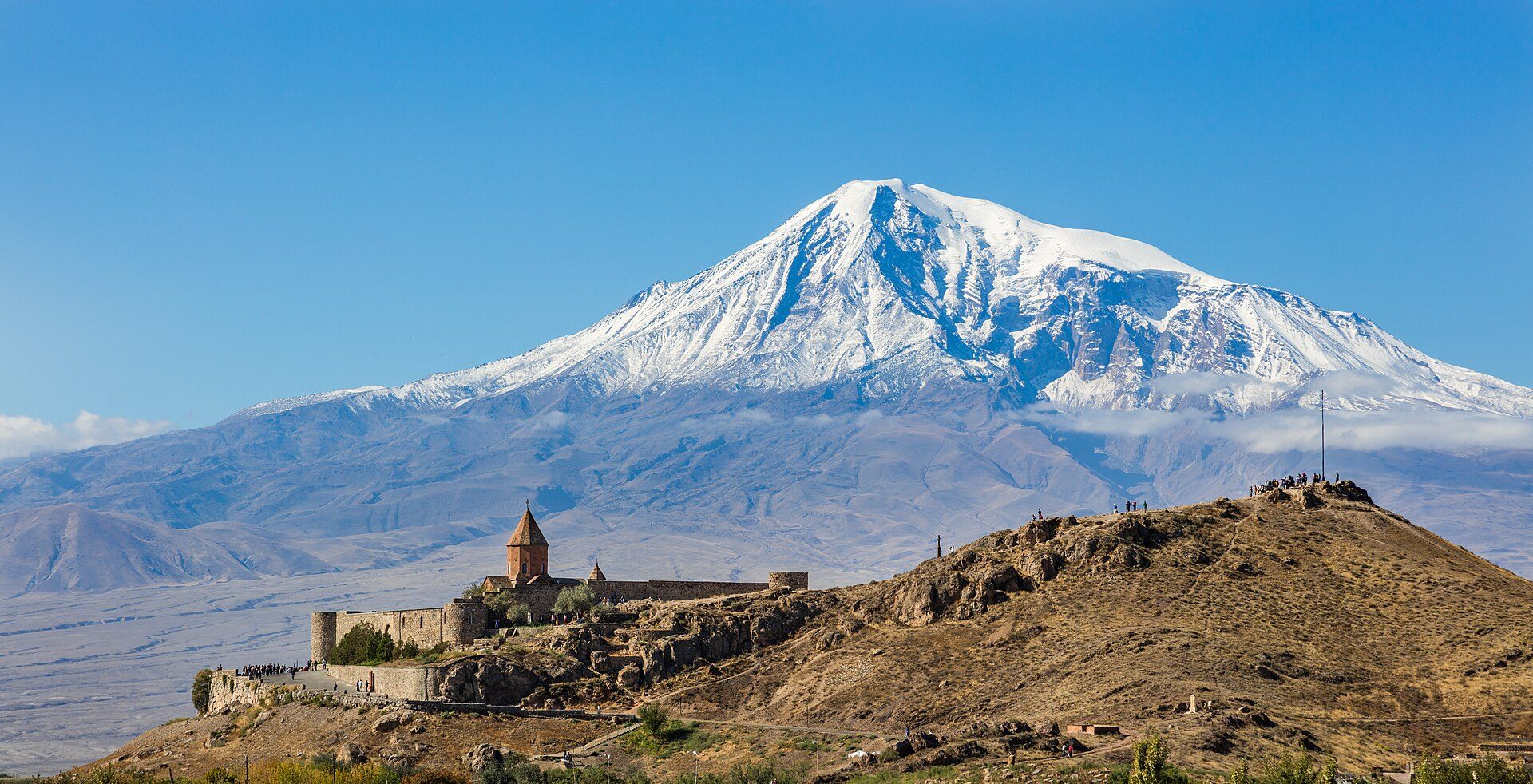
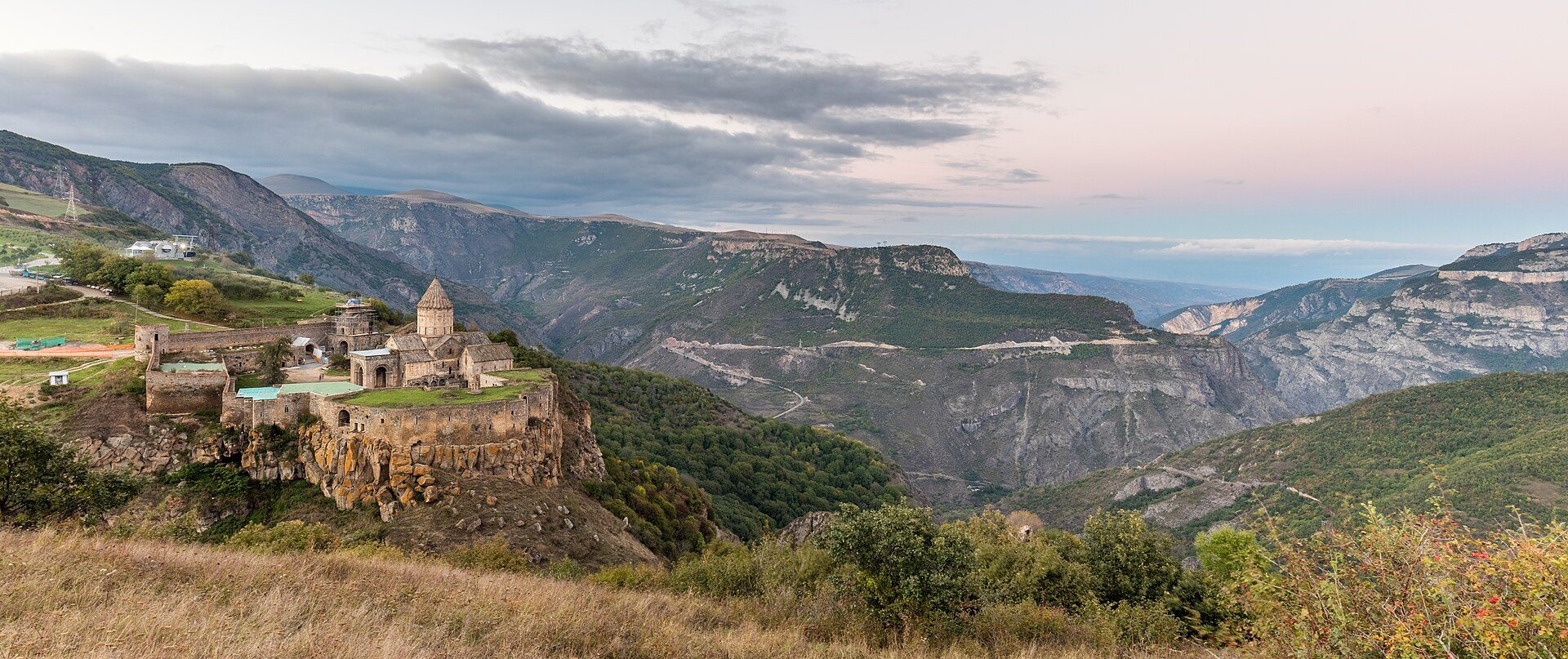
The mountainous landscape defines the lines of Armenian architecture. Like the mountains that surround them, the monuments of medieval architecture dominate the land. The stony ground, the jagged edges of the surrounding ridges and the contours of the architectural monuments merge into the landscape.
The traditional architecture of Armenia is reflected mainly in its temples, churches and monasteries. In the early Middle Ages, in the 5th and 6th centuries, it was represented essentially by rectangular basilicas, generally divided into three parts by rows of columns. The central section dominated the others.
Subsequently, at the end of the 7th century, the central dome altered the structure. The symmetrical, cross-shaped façade of the temple was adorned with lateral arches and crowned by an immense cupola, visible from the farthest corners of the temple. Over time, the simple and austere structures of the churches became more elegant and complex.
Monastic ensembles are composed of a temple, chapels, bell towers and domestic buildings (refectory, library, sacristy, and so on). The complex was often surrounded by a wall with adjoining dwelling houses. Until the 12th century, the construction of monasteries flourished widely across the country.
Non-religious constructions are also numerous: fortresses, palaces, feudal castles, caravanserais (inns for caravans) and bridges. Armenia is often regarded as an “open-air museum”, so varied and well preserved is its architecture.
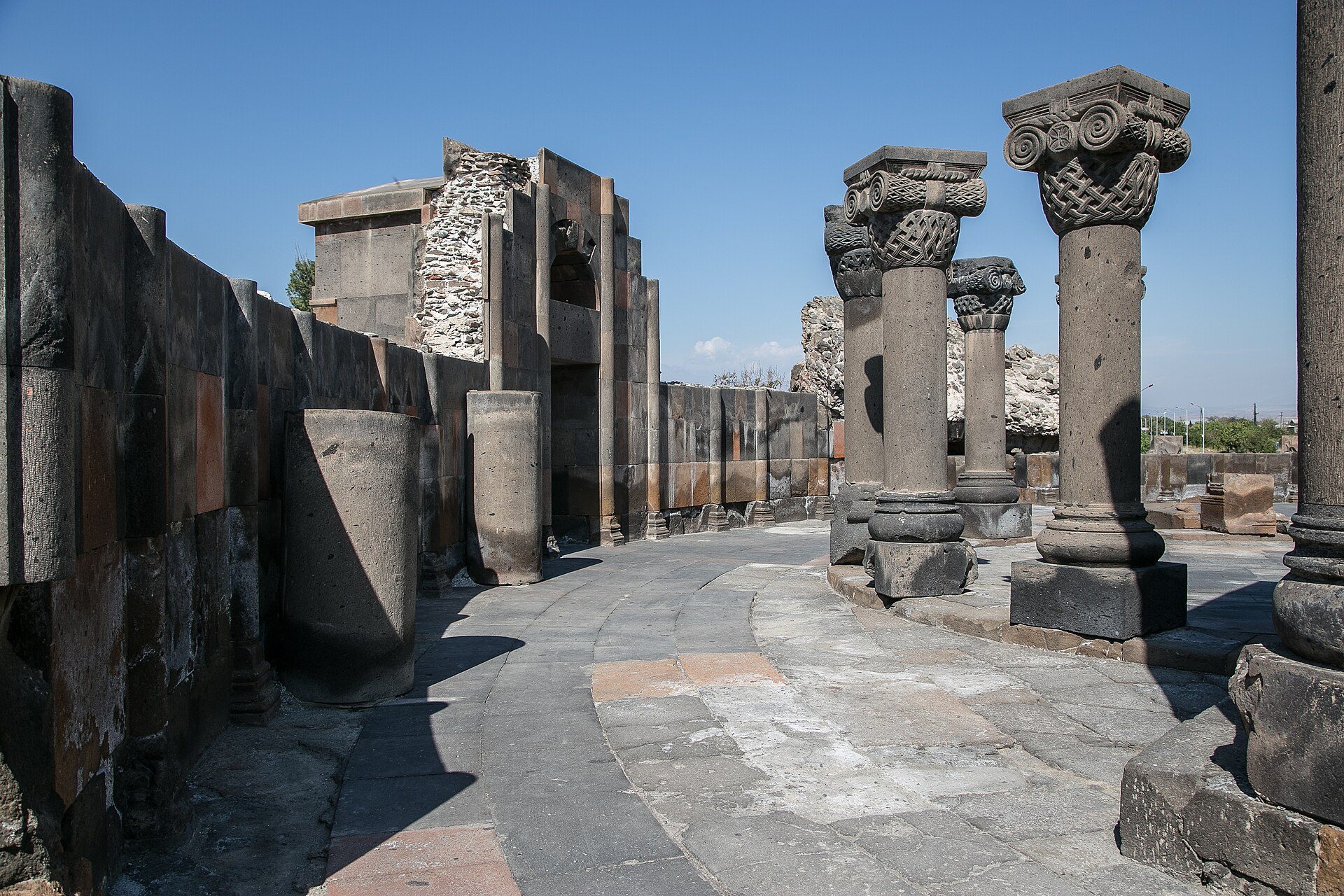
The most famous examples are the magnificent Hellenistic structure of Garni, the Temple of the Sun (3rd and 2nd century BC), the domed temple of Etchmiadzin (4th century), Zvartnots (7th century), and the medieval jewel of the Monastery of Geghard (between the 4th and the 13th century).
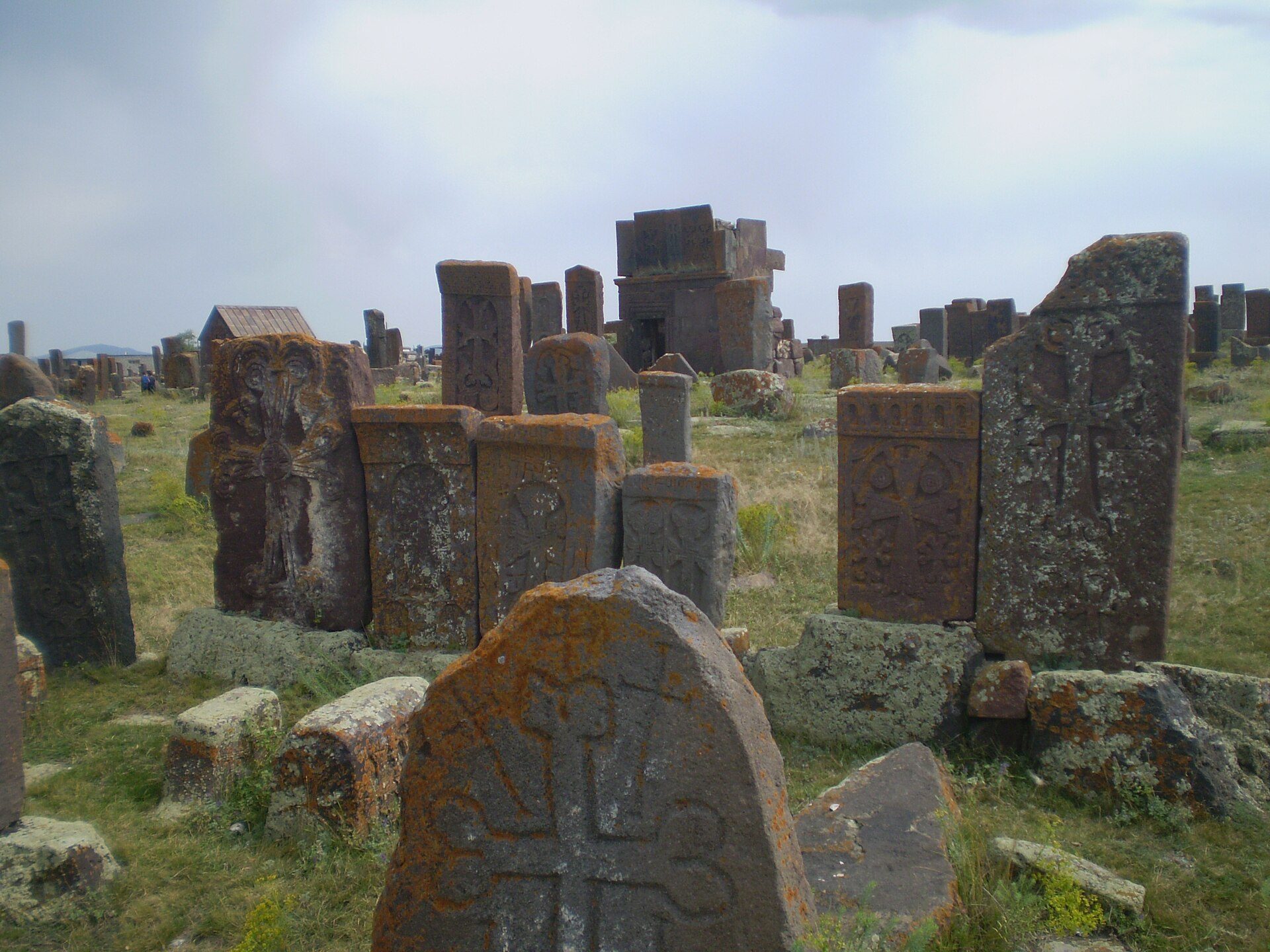
Armenian khachkars
Many cultures possess an original element that becomes a symbol of the entire national culture. In Armenia, this symbol is the “khachkar”, the stone crosses that exist nowhere else in the world. The word “khachkar” is formed from two Armenian roots: “khach” (cross) and “kar” (stone).
The khachkar is a decorative sculpture, based on ancient national traditions and taking a wide variety of forms. The khachkars came into being just after the adoption of Christianity.
In place of the pagan altars and in the places reserved for churches and monasteries, wooden crosses were installed. As wood was not durable, it was replaced by stone from the 9th century onwards.
The khachkars preserve the spirit of the Armenian people, with all the divinity of the Church. They were installed on various occasions: to commemorate a victory, to mark the completion of a temple or a bridge, to give thanks to God, and so on. They served as landmarks, but also as funerary monuments.
The largest cemetery of ancient khachkars is found near the village of Noratus. The oldest stones date from the 8th century.
The stonemasons who carve the khachkars are the varpets.
The applied arts in Armenia
Traditionally, carpet weaving, pottery, lace-making, the crafting of jewellery and household utensils form Armenian craftsmanship.
The oldest branch of Armenian applied art is the art of working gold and silver, which was already known to the inhabitants of the Armenian highlands during the 2nd millennium BC.
The art of casting and sculpting gold and silver, of stamping, of stone inlay, of polishing and framing, is expressed through objects of worship and of the everyday life of the Armenians.
Carpets are the most common household objects for Armenians. They are used for tables, chests, seats and beds, but also as door curtains and altar curtains in temples. Carpet weaving is the oldest craft mastered by the Armenians.
Painting and sculpture in Armenia
The earliest specimens of Armenian painting are visible on the architectural monuments of Etchmiadzin, of ancient Garni and of many other temples, including those of the Urartu period, around the 9th century BC.
The walls and floors of places of worship were covered with ornaments, bas-reliefs and sophisticated reliefs, many of which have survived. With the advent of the Christian religion, sculpture and painting were enriched with scenes linked to Christianity: the Day of Judgement, the Nativity, and so on, as well as scenes from everyday life. Expressive paintings cover the walls of the temples and create a figurative story. At the same time, icon painting began to develop.
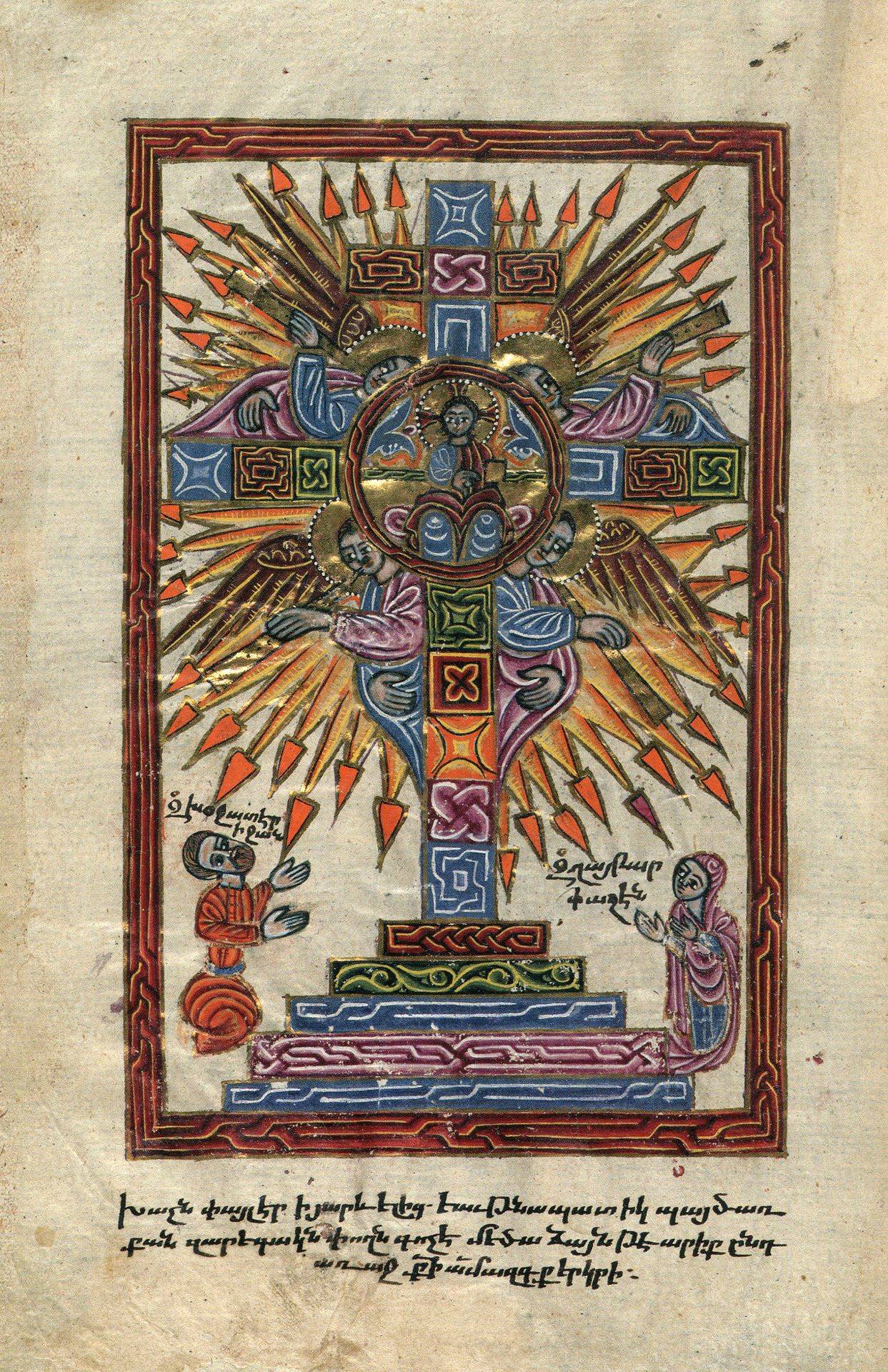
A special place in ecclesiastical art was occupied by miniatures, images of bright colours and religious content illustrating hand-written books. The first examples appeared in the 6th century, and this art reached its peak in the Middle Ages.
The 17th and 18th centuries saw the birth of frescoes and painting on canvas. In the 19th century, portraits, historical paintings and figurative paintings depicting landscapes developed.
Ivan Aivazovsky (1817–1900) was the great painter of seascapes, whose art has become an integral part of world culture. He was of Russo-Armenian origin.
Armenian literature
The first literary monuments in the Armenian language began to appear as early as the 5th century, with the creation of the Armenian alphabet. Movses Khorenatsi (410–490) left the greatest historical testimony. In his “History of Armenia”, he retraced the country’s history while preserving the national oral traditions and poetry.
Koryun, another author of the 5th century, described the life of Saint Mesrop, or Mashtots, the creator of the Armenian alphabet. He also translated a good many theological books into Armenian.
Armenian poetry preserves the names of Grigor Narekatsi (10th century), author of the Book of Lamentations, Nerses Shnorhali (12th century) and Frik (13th century).
The manuscript heritage of the Armenian people is preserved in one of the world’s greatest centres of manuscript culture: the Mesrop Mashtots Matenadaran. It holds more than fifteen thousand manuscripts on history, philosophy, law, medicine, mathematics, natural sciences, astronomy and music.
In the 19th century, Armenian literature developed under the influence of Russian and Western European cultures.
Theatre in Armenia
The art of theatre was introduced to Armenia by the founders of this art, the ancient Greeks, well before the Christian era. The Armenian king Tigranes II the Great built an immense amphitheatre in the 1st century BC.
According to Plutarch, King Artavasdes II created tragedies that were staged at Artashat, the second capital of Armenia in the 1st century AD.
Modern Armenian theatrical art dates from the second half of the 19th century. In 1921, the largest dramatic theatre in Armenia, the G. Sundukyan Theatre, opened its doors in Yerevan. Its repertoire consists of plays, great Western classics and renowned Armenian playwrights. In 1933, the Yerevan Opera and Ballet Theatre opened its doors.
Armenian music
Armenian music resembles no other. It uses original instruments that have survived from the early Middle Ages: the prototypes of the violin with the pandir and the bambir; strings with the tavigh and the knar; wind instruments with the zurna, bagpipe and avagpog; and percussion.
Folk singers are called gusans.
Church music came into being as early as the 5th century.
In 1868, Chukhajian wrote the first Armenian opera, “Arshak II”. The works of Alexander Spendiaryan (1871–1928) laid the foundations of the national classical symphonic music.
The 20th century saw the emergence of leading Armenian composers: Aram Khachaturian, Mikael Tariverdiev and Arno Babajanyan.
The Armenian duduk
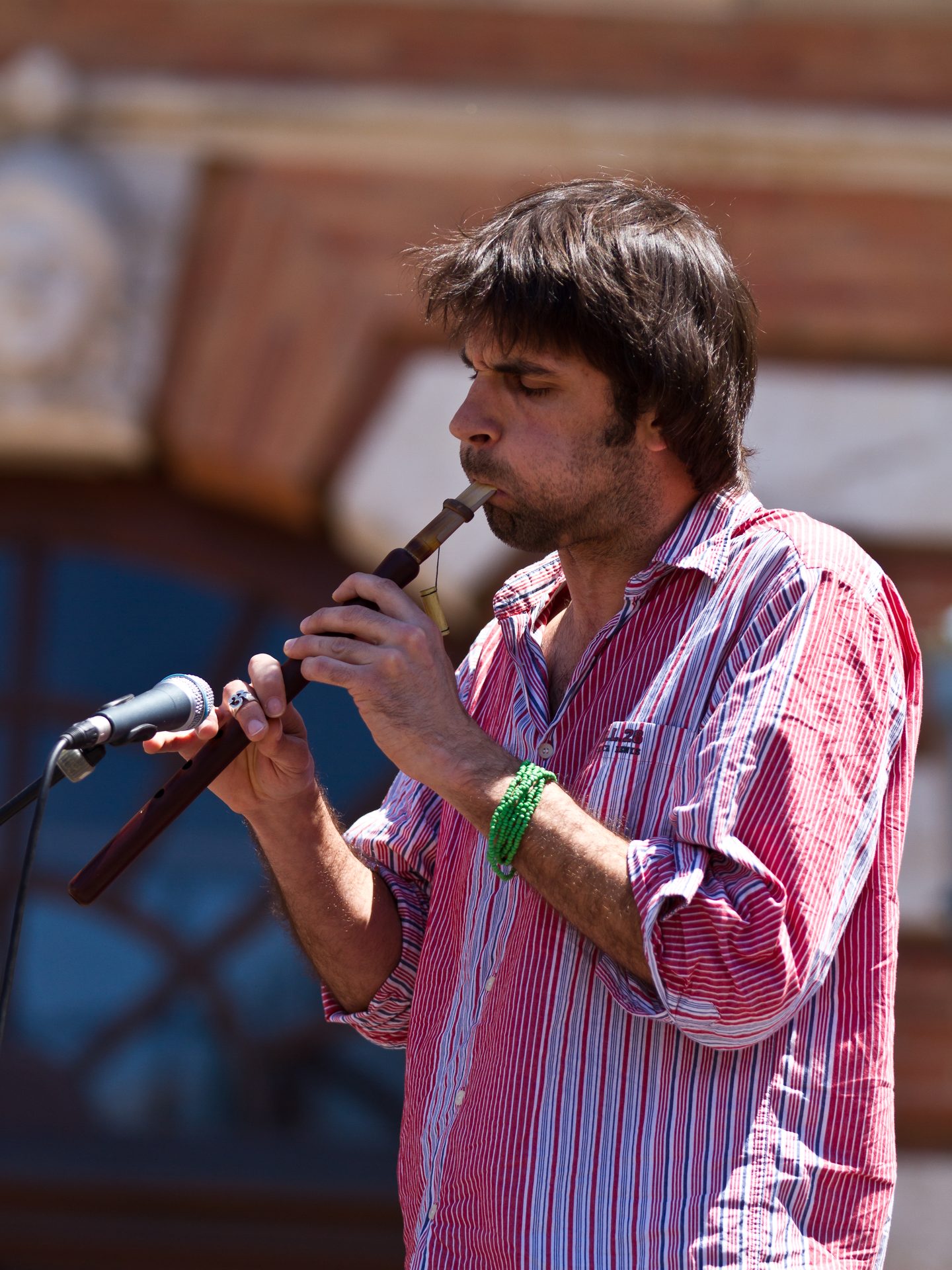
Armenian music is inseparable from the sad, deep sound of the duduk, an ancient national wind instrument. The historical roots of the duduk, called tsiranapogh, reach back to the era of King Tigranes the Great (95–55 BC). The duduk is known as the Armenian flute or oboe.
The duduk is made from apricot wood. It can come in three sizes: 28 cm, 33 cm and 40 cm. The number of holes on the instrument varies: seven or eight on one side, and one or two on the opposite side, for the thumb. The instrument charms with its soft, muffled sound and its harmonious, gentle timbre.
The musician Djivan Gasparyan popularised the duduk around the world. He is a celebrity in his own country and made the duduk famous by taking part in the soundtrack of the film “Gladiator”.
The duduk is also present in the music of Paul McCartney, Peter Gabriel, Brian May, Sting and Lionel Richie, as well as in the film “The Passion of the Christ” and the series “Game of Thrones”.
UNESCO proclaimed the Armenian duduk and its music a Masterpiece of the Intangible Heritage of Humanity in 2005.
Plan your visit
See this living culture where it belongs, in its churches, workshops and concert halls. Build your own itinerary or book an all-inclusive tour to experience it all, and read more about the duduk, the soul of Armenian music.